


April 30, 2026
Understanding blind spots is crucial for safe driving. A blindspot is an area around your vehicle that is not visible in your mirrors or direct line of sight. These invisible zones can pose a significant risk to drivers, pedestrians, and cyclists. In this guide, we will explain what is the blindspot is, how to check it, and how to minimize the risks associated with it.
What is Blindspot?
A blindspot refers to the area around your vehicle that you cannot see through your mirrors or direct line of sight. These areas can hide vehicles, pedestrians, or obstacles, making it crucial for drivers to check their surroundings regularly. Blind spots can vary based on the vehicle’s size, design, and the driver’s position.
For example, larger vehicles like trucks or SUVs often have more extensive blind spots. This makes proper blindspot management and awareness even more critical.
Why Are Blind Spots Dangerous?
Blind spots are one of the leading causes of accidents, especially when changing lanes or merging. Drivers might unintentionally move into another lane because they fail to notice a vehicle in their blindspot. This is why it’s important to not just rely on mirrors, but to conduct manual checks as well.
How to Check Blindspots?
Proper mirror adjustment is the first step to reducing blind spots. Here’s how to adjust your mirrors to maximize your visibility:
- Side Mirrors: Adjust your side mirrors so you can barely see the side of your car. This helps expand your view and reduces blind spots.
- Rearview Mirror: Adjust it to get a full view of the traffic behind you, without having to turn your head.
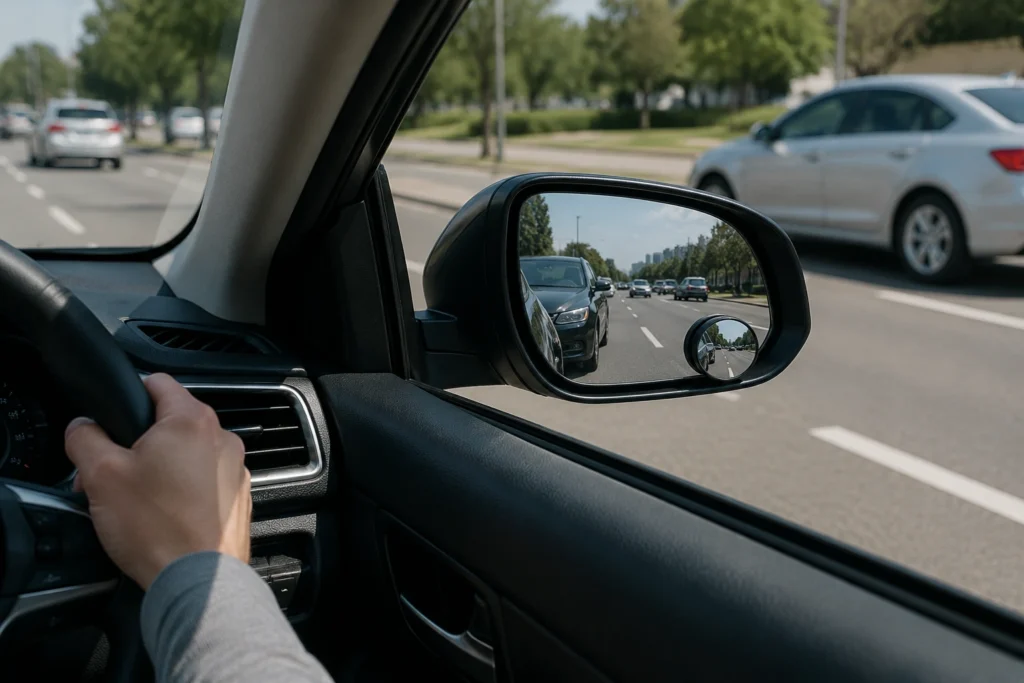
Before changing lanes, always perform the following steps:
- Check your mirrors.
- Signal your intention to change lanes.
- Do a quick over-the-shoulder check to make sure no vehicle is in your blindspot.
This simple routine can prevent accidents and keep you aware of your surroundings.
Types of Blind Spots
While all vehicles have blind spots, there are different types depending on the car’s design:
- A-Pillar Blind Spot: This occurs where the windshield meets the side window. It’s common in modern vehicles with thicker pillars for safety. These can obstruct your view at junctions.
- Rear Blind Spot: Vehicles like SUVs or vans often have large rear blind spots due to higher rear windows or solid doors. Parking sensors and rear cameras are essential tools for avoiding accidents while reversing.
- Side Blind Spots: Larger side mirrors or additional blind spot mirrors can help you better view areas that are otherwise hidden, especially in larger vehicles like trucks.
When Should You Check Your Blind Spots?
Blind spots need to be checked frequently, especially in these situations:
- Before Moving Off: Always check for pedestrians, cyclists, or other vehicles before pulling out, especially when parked on the side of the road.
- Changing Lanes: Follow the Mirror-Signal-Manoeuvre method. After checking your mirrors, perform a quick over-the-shoulder check to spot any hidden vehicles.
- Merging onto Motorways: Check your mirrors and blind spots well in advance to ensure a smooth and safe merge into motorway traffic.
- Turning at Junctions: Turn your head to check around the A-pillar blind spot to ensure you have a clear view of pedestrians and other vehicles.
How to Minimize Blind Spots
- Adjust Your Mirrors: Set your side mirrors so you can barely see the side of your car, allowing a broader view.
- Use Blind Spot Monitoring: Some cars come with advanced blind spot monitoring systems that alert you to any vehicles in your blind spots.
- Perform Shoulder Checks: Before changing lanes or turning, always check your blind spots manually.
- Avoid Driving in Another Vehicle’s Blind Spot: If you’re driving next to a large vehicle like a truck, move ahead or drop back to avoid staying in their blind spot for long.
Technology for Blind Spot Safety
Modern vehicles are equipped with Blind Spot Monitoring (BSM) systems, which use sensors to detect vehicles in your blind spots. If another vehicle is detected, the system will alert you with a visual indicator or even an audible warning. However, while helpful, these systems are not foolproof. Always combine technology with traditional checks to ensure maximum safety.
Conclusion
So, what is the blindspot and why is it important? Understanding blindspots and regularly checking them is a key part of becoming a safe driver. By adjusting your mirrors, using technology, and performing manual shoulder checks, you can significantly reduce the risks associated with blindspots. Always make it a habit to check your blindspot before changing lanes or making turns, and you’ll improve your overall road safety.
Frequently Asked Questions
- What causes blind spots in driving?
Blind spots are caused by vehicle design elements like window pillars, mirrors, and the vehicle’s body shape. They can be minimized by adjusting mirrors and performing shoulder checks.
- How do I prevent blind spots while driving?
To prevent accidents from blind spots, adjust your mirrors properly, use additional mirrors if needed, and always perform manual checks before changing lanes or turning.
- How can I fix blind spots in my car?
You can reduce blind spots by adjusting your side mirrors, installing blind spot mirrors, and using a blind spot monitoring system if available in your vehicle.